
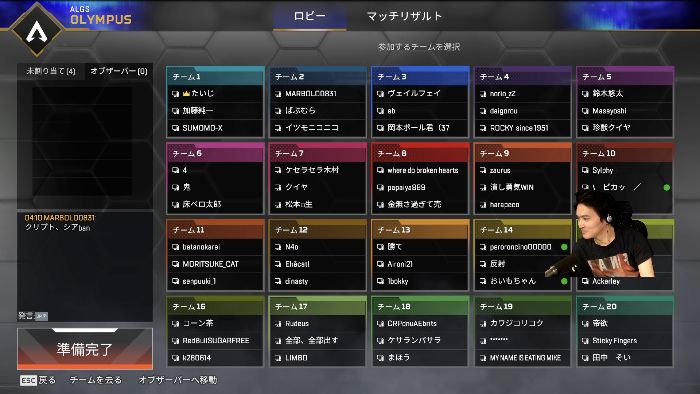
Highlights of eight matches through the flow of conversation
The video introduced here collects scenes from Junichi Kato, Sumomo and Taiji’s team at the CR Cup on October 4, 2026. It has breaks for matches one through eight. It is a highlight compilation, not complete footage of every match from beginning to end.
See the 11th tournament date and rules (official CR Cup) ↗
Beyond the firefights, the conversation preserves where to aim for beforehand, when to leave a position and how to reflect on a scene that went badly. Even knowing the outcome, listening for what information the three tried to share in the moment helps connect the scenes.
Captions mix in-game audio and multiple players’ speech. This article does not quote words whose speaker cannot be established as a particular person’s line. They are presented as team discussions, with the video available for checking individual voices and detailed play.
Just before the event, an error message causes a stir
In another published cut preserving the exchange before the first match, participants are unsettled by something outside the match. The game displays an error that an anti-cheat integrity check failed. Unsure what it means, they read the message and ask one another, “What is this?”
A voice grumbles that the wording makes it sound as if they did something wrong; others respond with jokes. They worry whether they can get in, but eventually someone reports, “I got in, thank goodness.” The scene preserves a moment of pre-event alarm and the banter in response; it does not explain the cause of a major problem.
Another short features self-deprecation before the event
In a separate published Short of pre-event chat, talk of generational change produces an exaggerated joke describing “three who used to be popular.” It is a brief scene to enjoy the atmosphere before play.
This short scene comes from a different stream than the eight matches in this article. Captions alone cannot establish each speaker or whom the three refers to.
Another short moves from practice to the event
In a published Short after practice on another day, a comment says the team’s preparation has reached its limit; after words of thanks, they encourage one another that they can do it in the event. The brief exchange preserves their feeling after practice.
The original stream listed in its description differs from the eight matches in this article. It is presented as a related pre-event video without establishing match results or individual speakers.
Matches 1 and 2: making the destination clear to everyone
From the opening, they keep discussing where to fly and checking opponents’ positions. They must consider where to enter next, not merely react to the enemy in front of them. Deciding on movement and actually getting all three to the same place form one continuous task.
Early in match one, they discuss deciding a direction after the ring closes and whether a drone can check the surroundings. Rather than deciding before information is available, they narrow destinations while watching the time remaining.
Later, when they learn squads are fighting elsewhere, one proposal is to push immediately while another voice warns of being shot from behind. Agreement follows a suggestion to let the opponents behind go first, and they try to judge after watching the surroundings. After the match, an exchange also reviews whether scouting was necessary when they were already inside the ring. This organizes caption-based conversation without determining speakers or whether the judgment was correct.
In the match-one debrief, they discuss not having settled a final position to use when in trouble. Rather than ending with regret over one mistake, they say someone should think about it next time and a response accepts the role. They keep discussing whether to fly or enter later. A separate 58-second cut follows movement discussion into contact, encouragement after an apology, then post-match assessment.
Match two, from 3:29, also features finding a destination, checking it visually and sharing a ping. One person picturing a location is not enough to complete a team move. Instructions overlap and voices recheck the destination. The busy exchange conveys the difficulty of sharing a decision. A separate 41-second cut follows the conversation from ping sharing and confusion at the destination to a post-match recollection that the location was unclear.
Matches 3–6: shooting, healing and dividing sightlines
In match three, calls to revive a teammate and report healing overlap with reports of enemy positions and damage. In combat they must share not only who can shoot, but who is watching a teammate and where enemies may arrive in the meantime. Brief calls help reveal what they are trying to do. A 38-second cut follows the conversation from warnings about enemies to revival, healing and checking surroundings, then to reflection. Treatment during combat and assessment form one flow.
In match four they discuss flying to the next place and the need to heal first. Wanting to move does not always mean they can move immediately. After things go badly, an apology and encouragement lead into the next scene.
In match five, they first discuss waiting where they are and considering what to do if the next ring is unfavorable. While handling attacks around them, they also talk about a future move. Surviving immediate danger and anticipating what comes next happen at the same time.
Match five does not end with waiting. Warnings that enemies are coming and to watch the rear overlap with a voice saying “It’s okay.” “Gas is gone” and “I’m down” mark rapidly changing conditions in short phrases. The busy switch from discussing a future move to dealing with enemies present is preserved.
In match six, they continue discussing who watches which direction and which place need not be watched. Guard above, or watch below? Even after a decision, enemy movement can require another check. The short video segment contains passing information, changing responsibility and checking again.
Late in match six, warnings overlap that enemies are coming: “There’s no fence behind us” and “Unko-chan, there’s no fence here.” As they discuss whether to stay or move, they also alert one another to the situation behind.
After taking fire, calls to be revived and reactions to thrown items follow. Finally come words reflecting on the preceding judgment: “Behind us, seriously?” and “I thought we were fighting. Sorry.” From the warning that enemies were coming to the explanation that someone thought they would fight, the conversation preserves a mismatch between the situation and how it was understood.
Matches 7 and 8: keeping communication going to those who remain
The match-seven section is short, but even when a teammate is down, they say they are watching the surroundings and call for a revive. Afterward, someone also says they did what they could. Unlike a conversation that only seeks causes of failure, it preserves words checking what could be done in a difficult situation.
After “45 seconds left,” a voice calls, “You can go in. I’m watching. Revive them.” One person revives while another watches. Warnings of enemies coming from above and reactions to thrown items overlap. Heard alongside the detailed calls immediately before it, the final “We did everything we could” becomes more than a post-match remark.
Match eight begins at 13:50. The discussion continues according to the situation: reviving a teammate, moving and waiting for other teams. Near the end a voice reports a disconnect, but the exchange among those remaining does not stop.
In match eight a voice reports nearby enemies fighting each other and suggests waiting before entering. Meanwhile calls of “Revive inside” and “Heal” continue toward the next move. It is not simply a choice between shooting and withdrawing: reviving, healing and coordinating entry timing are part of the same scene.
Late in match eight, after a voice suggests acting on the assumption that returning is impossible, another says returning may be possible, and their assessment shifts. Immediately after the match is decided, words change from disappointment to appreciation of a good match.
Listening through the final reactions reveals time that cannot be reduced to one firefight’s success or failure. Frustrated words and appreciative ones coexist in the same video. Rather than assigning blame, it is a scene in which to hear how three people who watched the same match to the end speak to one another.
A 26-second late cut contains voices mindful of remaining opponents and reactions immediately after the outcome.
For newcomers: the ring and rotation
According to EA’s official terminology guide, the ring is an area that shrinks during a match and deals damage outside it. In a “rotation” to another area of the map, the relationship between the ring and other squads matters. This game mechanic forms the background to the repeated discussions of the next position.
This is basic terminology for readers, not an official determination of correct decisions or causes of wins and losses in each match. The article does not independently calculate the overall tournament ranking or individual results. Listening for where they plan to move makes the conversation easier to follow even without every term.
Beyond Jun highlight: reflection becomes the next discussion
Here is an editorial perspective. In this highlight, notice how after each match they return to discussing the next move. If a destination was unclear, how can it be conveyed? If sightlines overlapped, how can they be divided? Again and again they turn what went badly into a concrete next discussion.
Watching eight matches together draws attention not only to spectacular shooting but to the brief exchanges in between: voices watching the surroundings during a revive, checking destinations and speaking afterward. It can be enjoyed by chapter or across all 17:31 as a video of those accumulated calls.
Video chapters
- 0:00 Match 1
- 3:29 Match 2
- 5:10 Match 3
- 6:20 Match 4
- 8:04 Match 5
- 10:53 Match 6
- 13:05 Match 7
- 13:50 Match 8
Sources and editorial policy
Original stream (according to the published video’s description) ↗
Refers to Japanese captions and chapters in the published video and related cuts. Caption generation and verification differ by video. Captions may contain recognition errors, and multiple speakers’ words are not assigned to particular individuals. Full footage of each match, on-screen placements and overall tournament results have not been independently checked.
The pre-event error scene is based on published captions 0:00–0:37 of separate video VTHuRZXyhuk. Caption production method, original audio and speakers are unverified; it does not establish the cause or any cheating.
The additional Short ZnlENgx2qN0 lists a different stream in its description. Its published automatic captions 0:00–0:17 were reread on October 27, 2026. Original audio, speakers, identity of the three and exact correspondence to the original stream are unverified.
The post-practice Short j34Du8IbD_c lists a different stream in its description. Its published captions 0:00–0:17 were reread on October 27, 2026; original audio, individual speakers and cut boundaries against the original stream are unverified.