
When naming a representative, his name still comes up
In a chat titled “Loneliness,” dated February 6, 2019, the topic turns to fighting games and Kato marvels at Umehara’s prominence.
“But seriously, it’s amazing.”
“When you answer who represents professional fighting-game players, after all...”
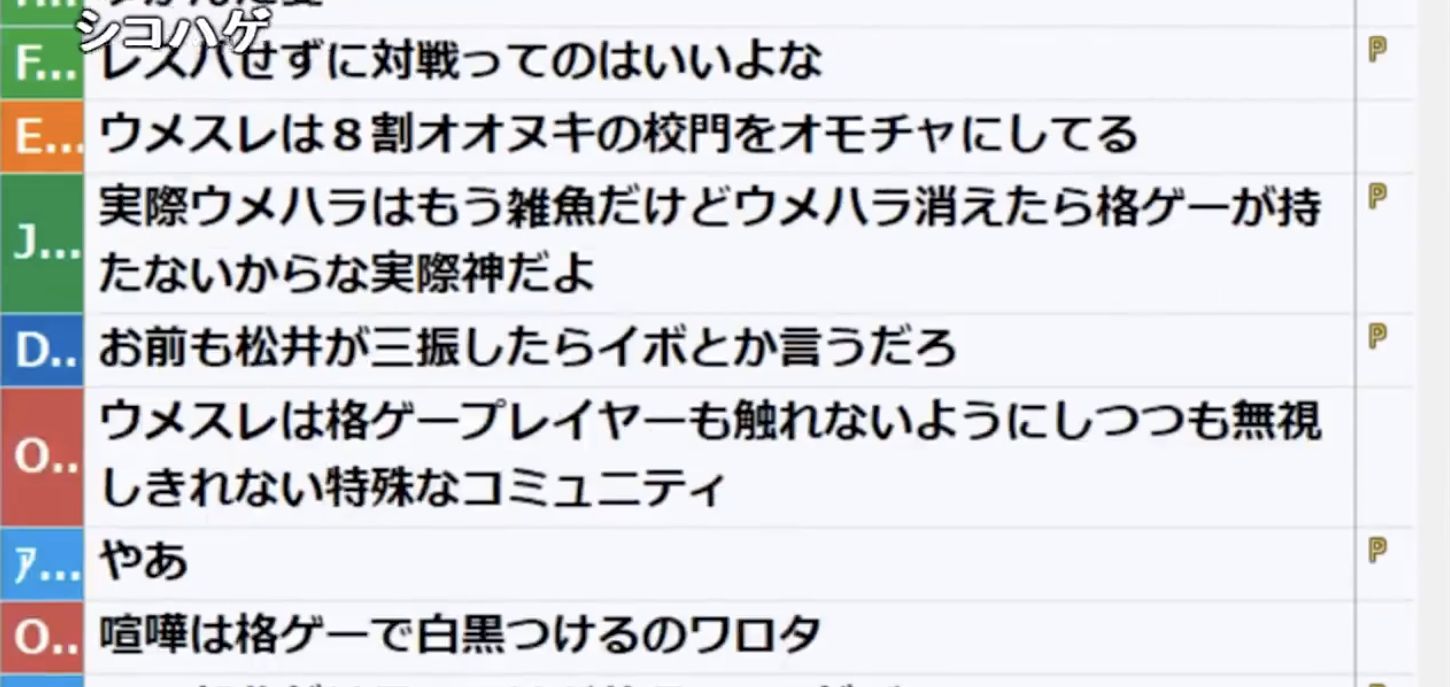
His point is that Umehara’s name still comes up. Mentioning tournaments and players he heard were strong at the time, Kato considers whether the level of fighting games has risen. Names and results garbled in captions have not been filled in. The heart of the discussion is his interpretation: rather than dismissing a longtime famous player as having declined, he sees the surrounding players as having grown stronger.
“It’s not that Umehara has declined; the level around him has risen too much.”
Watching the interactions, not just the matches
The discussion expands to interactions among fighting-game players. This is how it looks to Kato:
“With fighting games, the top players around the world are all really friendly.”
He immediately adds that some people do not get along.
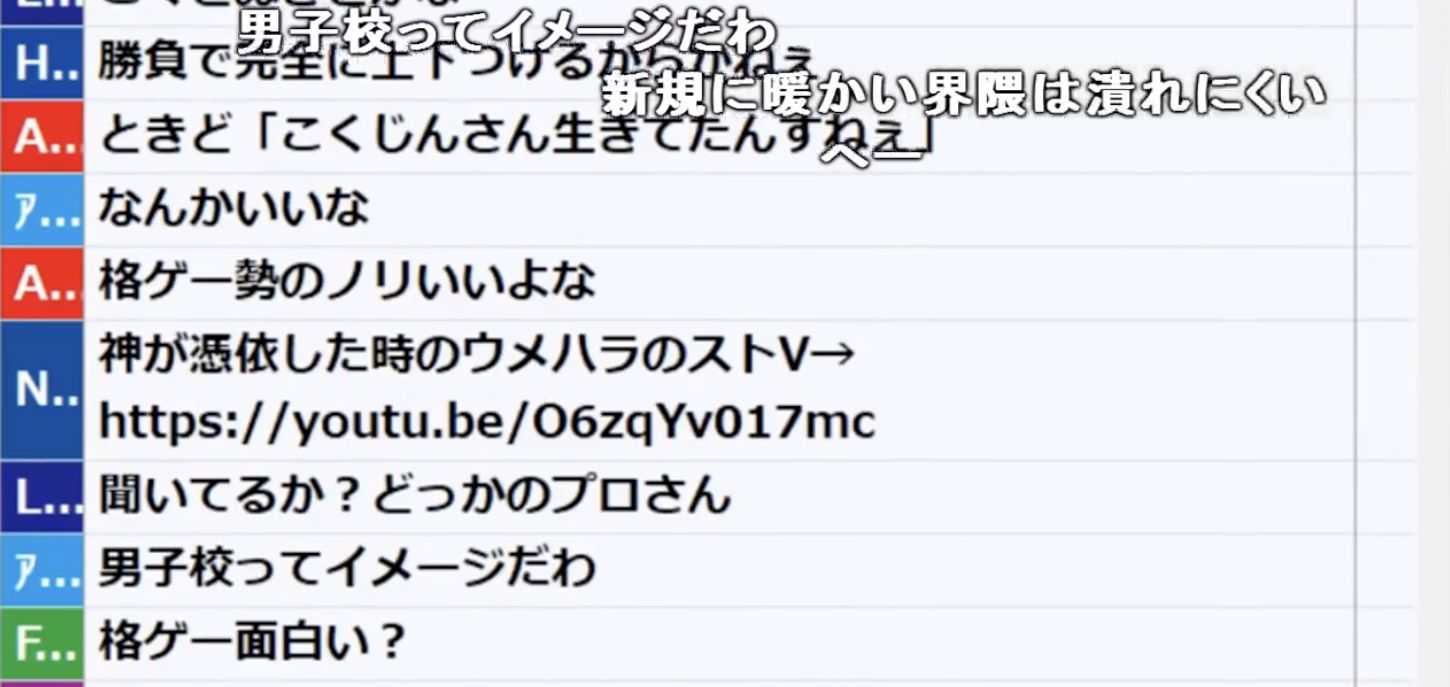
“From the outside, to people who don’t play fighting games, it looks exclusive, but...”
Even so, he feels barriers among players are low. Watching players from different countries talk and stream together is entertaining, he says, moving to what he enjoys as a viewer. He acknowledges that it might look closed to nonplayers, while he sees the closeness of their interactions.
Kato immediately adds that some people do not get along. This is not a claim that everyone in the scene is friends, but his impression from watching tournaments and streams. He concludes that it is enjoyable to see players having fun, not just wins and losses.
“Watching Korean and American pros and everyone is really entertaining.”
“They all look like they’re having fun playing.”
Winning and being supported
Another discussion comes from a different time. A roughly five-minute clip published in October 2026 begins with a viewer’s assessment to the effect that someone holds a professional spot despite being unable to beat young players. This is not Kato’s own assessment; the video description says his discussion begins as a response to a viewer comment.
His response centers on whether professionals should be measured only by wins and losses. Kato first acknowledges the importance of winning, then says that drawing spectators who want to watch and cheer also supports a professional’s value. Even with the ability to win matches, one’s presence as a professional would differ if nobody watched or supported them. “Audience” here means people who come to a venue or stream because they want to see that player, not merely a number.
The discussion also moves to differences between professionals and streamers. He describes differences in how they attract audiences and what they show, not a ranking of one above the other. His wish that Umehara continue as a professional rather than become a streamer also reflects Kato’s preference. He seems to find a reason to keep watching in Umehara’s presence in competition itself.
Kato immediately cautions that thinking about spectators must not be interpreted as “winning doesn’t matter.” Because competitors seriously try to win, spectators want to cheer them on. Rather than making victory and popularity alternatives, his sequence places the effort to win first and support after it. The picture of fans supporting players and thereby competition is not meant to trivialize results, but to discuss how being watched helps competition continue.
He also invokes Hanshin’s ranking and attendance as an analogy. It should be heard as Kato’s example, not an attempt to verify the accuracy of years, rankings or attendance: an energetic illustration that audiences can gather for reasons beyond wins and losses. Enlarging the story with laughter is part of the casual conversation.
Regarding Umehara, his 2019 view returns: perhaps the surrounding level has risen rather than the player declining. This time, respect for someone who has competed for a long time is central. Kato draws a line: he is not saying “deify him,” nor accept everything he says as right. Even without agreeing with everything, one can respect a career in competition and keep cheering. His wish that Umehara remain there for a long time overlaps with that.
This published clip is presented as a separate topic and time from the 2019 stream. In the former, the enjoyable interactions among fighting-game players leave an impression; in the latter, he discusses both striving to win and being supported by spectators. Together they reveal his personal view that competition is not merely match results.
[Published clip 0:00] [1:00] [2:14] [3:41] [4:06]
He wants to keep cheering and see him continue as a player
A separate published Short from a stream dated October 13, 2026 includes congratulations on Tachikawa’s runner-up finish. Joking about his old hairstyle, Kato goes on to say he wants to keep supporting him and see him continue appearing in tournaments as a player, not only behind the scenes. The tournament name, result and current affiliation are not independently verified; this is presented as his statement at the time.
Streams and sources
Sources and verification
Links to his own channel open the whole video; stream archives open at the referenced time.
- [ch] Unko-chan “Loneliness” [2019/02/06] ↗
Referenced time 05:42:04–
Detailed sources and verification
Source times, scope and editorial approach
S01: [ch] Unko-chan “Loneliness” [2019/02/06]
05:42:04–05:43:42
Watch the original from this time ↗
S02: [ch] Unko-chan “Loneliness” [2019/02/06]
05:43:38–05:45:12
Watch the original from this time ↗
Published clip: [Junichi Kato on professional value and respect for Daigo Umehara (chat)]
Published October 1, 2026, 5:08. Described as a public clip from a stream begun September 23, 2026. Times in the article are elapsed times in this clip, separate from the 2019 stream.
- Based on the public caption interface. Whether captions are automatic or manual, the original audio and individual speakers are unverified. The opening is treated within the video description’s scope as a response to a viewer comment.
- Garbled caption passages (player names, the baseball example, contracts) are not used as definitive quotations or specific facts in the text.
- Hanshin rankings and attendance and comparisons with PL are treated solely as analogies, not used to verify history. Ages, current results or skill, player pay and contract terms are not stated.
S04: Junichi Kato on supporting Tachikawa and wanting him to continue as a player (chat) #加藤純一 #立川 (stream dated October 13, 2026)
The entire 44-second published Short’s Japanese automatic captions were consulted. It is a different stream and topic from the October 1 clip. Tournament name, runner-up result and current affiliation have not been independently verified. Original audio and speakers have not been independently checked.
Unverified points
- Quotations were checked against saved captions. Final checks against original audio and individual speakers are incomplete.
- The date in the title is distinguished from filming and event dates.
- Images are visually checked actual frames from the original video; their match to the instant of a quoted utterance has not been checked.
- This was his view in 2019, not an objective account of current ability, results or the whole community.
- Capcom Cup results and unclear names of other players were not adopted. A 2022 team assessment was also excluded because its subject is uncertain.
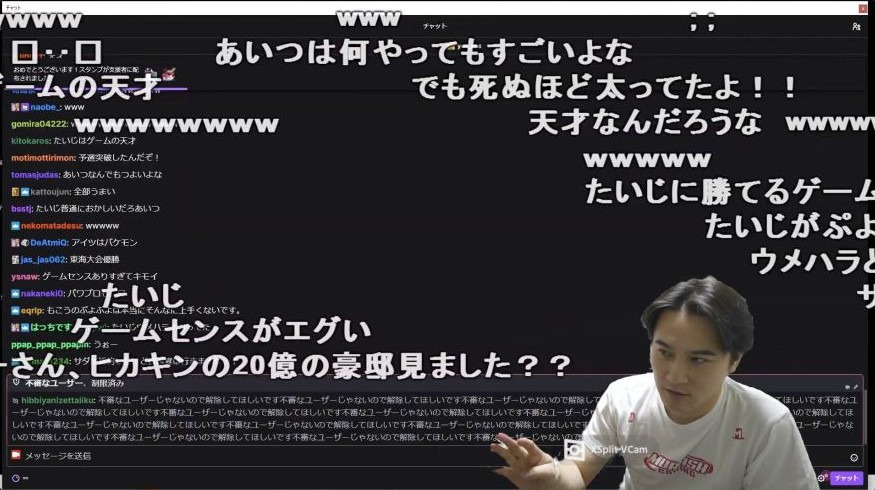
- Comments in images include opinions different from his. Quotations are based on saved captions; on-screen comments are not treated as his speech.
- External profile: Red Bull’sDaigo Umehara profileintroduces him as a professional fighting-game player. It does not verify the streamer’s 2019 impressions or tournament assessment.
- Background:JeSU’s “History of esports”says Umehara signed a sponsorship with a US peripherals maker in 2010 and was reported as the first Japanese professional gamer. This describes contemporary reporting, not a legal or industry-wide official designation of “Japan’s first,” nor evidence for every statement in the stream.